


.svg)

.svg)


AI Solved the Wrong Half of Your Learning Content Problem



The easy half is done.
A course that once took weeks can go from a prompt to a first draft in an afternoon. For a learning team under pressure to cover more of the business, that looks like relief.
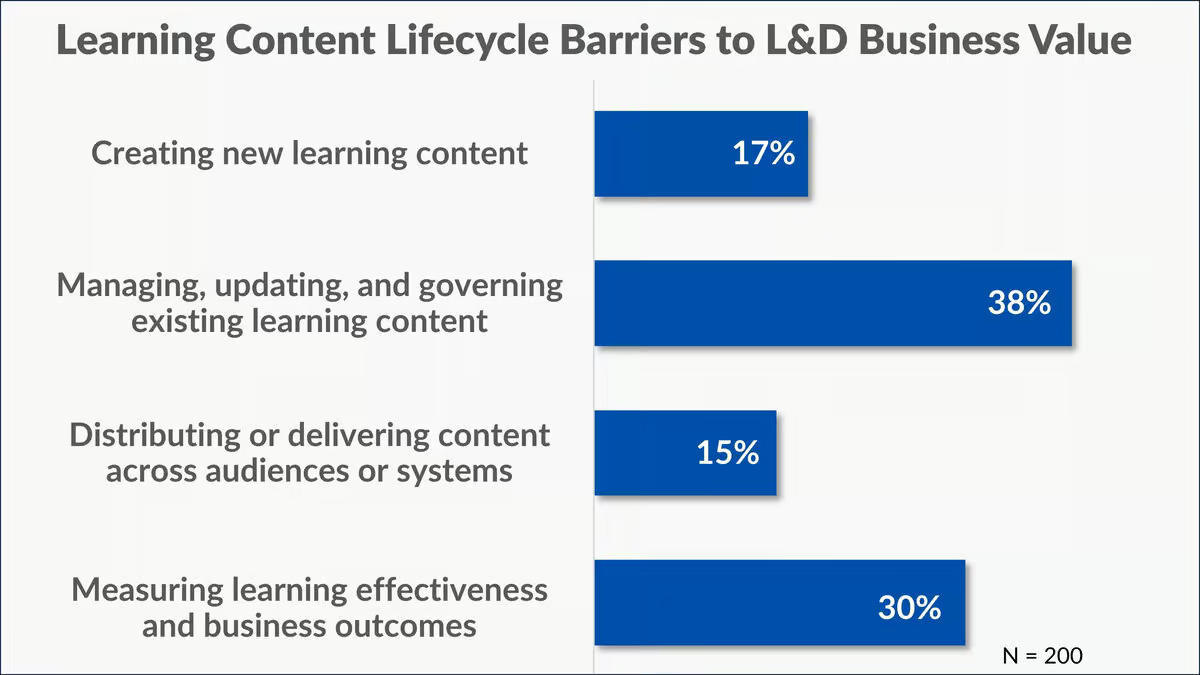
But creation was never where the value leaked out. In dominKnow's State of Learning Content Management 2026 research, 38% of L&D leaders named managing and updating existing content as the biggest limit on business value. Another 30% named measuring whether it worked. Together, 68% point to a barrier that shows up only after content exists. Creating it accounts for 17%.
AI pushes hard on that 17% and leaves the 68% where it was. Then it adds weight. A Workday study found nearly 40% of the time AI saves gets handed straight back to rework.
So the honest version of "AI makes content easy" is a question. Easy to produce, and then what?
The bottleneck moved from making to checking
Every learning asset has a life. Someone creates it, a reviewer checks it, an approver signs off, and then it gets used, updated, and eventually retired.
AI speeds up the first step and leaves the rest alone. That moves the pressure. When a team produced five courses a quarter, five reviews fit. When the same team can produce fifty, the people who can confirm a course is accurate and current become the constraint, and most organizations never staffed for that.
This is why faster generation on its own rarely turns into business value. More drafts arriving faster does not add reviewers. It lengthens the queue, and the backlog is where the real cost sits.
It also raises the stakes on knowing what you already have. The hidden cost of scattered content was real before AI. AI multiplies the versions in play, and with them the number of calls about which one is correct.
A review without a record proves nothing
47% of organizations require human review before AI-generated content publishes. Useful, until the next number: only 30% have versioning and traceability of AI-assisted changes.
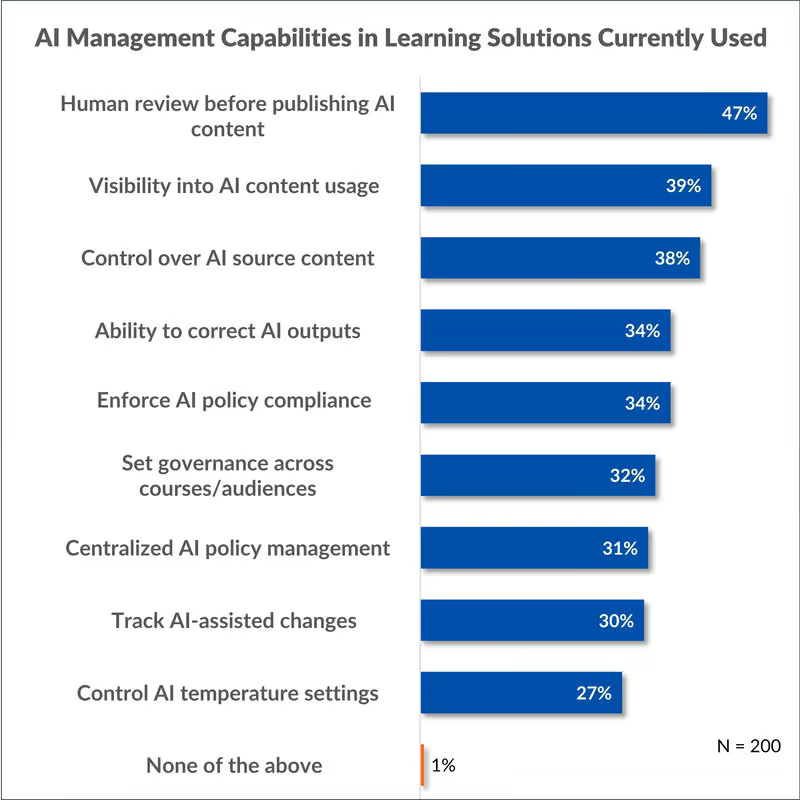
A team can run every draft past a human and still be unable to show which content was reviewed. Reviewed and unreviewed content sit in the same library and look identical to whoever opens them. The record is the only thing that tells them apart, and most teams do not keep one.
That gap has a name in the data. 23% of leaders are completely confident their AI-generated content is governed by policy; the rest rate themselves lower.
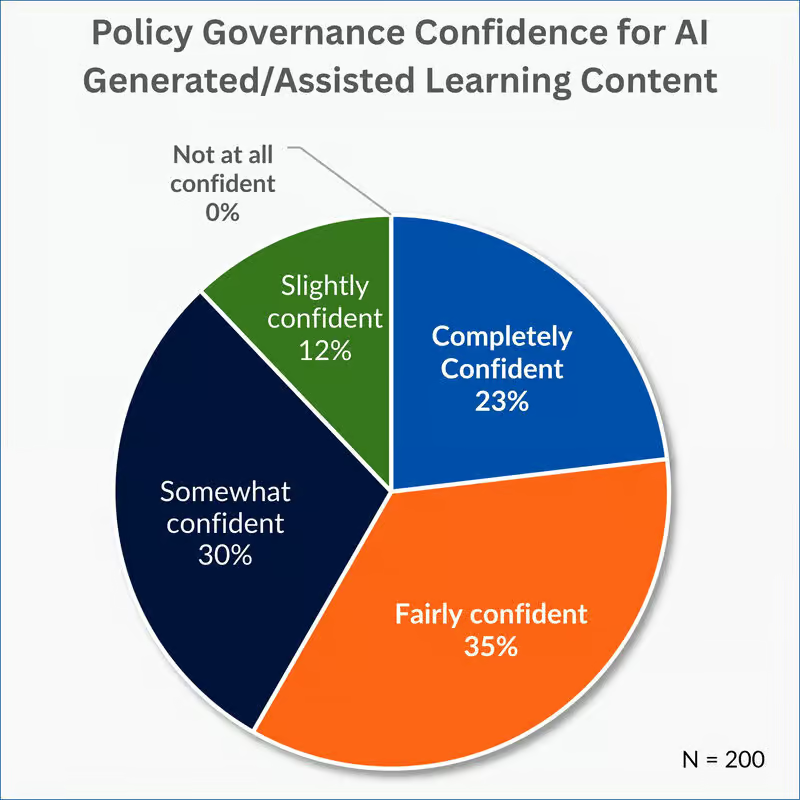
As Margie Meacham put it on a recent IDIODC episode, thinking something is correct is not the same as governing it. Confidence is a feeling. Governance is a record you can produce on request.
The answer is not more reviewers
The reflex, when review becomes the bottleneck, is to ask for headcount. That is the wrong fix, and the wrong thing to take to a budget meeting.
The gain comes from making each review count for more. When content is single-sourced, one review covers every place an asset is used, rather than a fresh check of every copy. When feedback, versions, and approvals live in one collaborative review workflow, nobody hunts for the final file.
One financial services compliance customer stopped re-uploading SCORM packages and saved about 20 hours of QA on every update, with content reaching learners almost immediately. The Society of Actuaries cut content review time by 50%. Neither hired a review team. They changed how review worked.
That is the shape of the real solution. Govern the content, and the same reviewers clear far more of it.
Software already ran this experiment
L&D does not have to guess how this plays out. The software world hit the same wall two years earlier, and it has a name for the failure: vibe coding.
The pitch was that anyone could describe what they wanted and let the AI build it. It worked, to a point. Teams shipped prototypes fast, then found the prototype was the easy part. Nobody had reviewed the code, so nobody could maintain it or safely ship it.
Our own learning systems architect, Adam Reynolds, spells out the learning version on an IDIODC episode he calls vibe SCORMing. Feed an AI a source document, ask for a course, and spend a few hundred turns shaping it until the SCORM package works. The package ships. Everything that went into it, the decisions about sequence and what to cut, is gone. When an SME later finds an error, there is no record of how it was built. Fixing one line can mean starting over.
Adam names a second failure that any reviewer will recognize. At volume, the AI stops hallucinating and the human starts. You have said what you wanted so many times that you assume the output matches, and you wave it through. He describes producing fifty-five courses that way and not remembering what any of them contained.
On the same episode, a listener's SMEs rejected the AI-generated content because it did not fit how the work is done. That rejection is not a failure of the workflow. It is the workflow doing its job, and it only happens when a qualified person sits between the draft and the learner.
Your AI is only as current as your library
A quieter risk sits underneath all of this.
AI generates from the material you give it. When a grounded, enterprise AI draws on your own content, what it produces is only as good as that library. If the source is out of date, the AI will confidently build new content on old answers.
The scale of that exposure is in the data: on average, 46% of active learning content is outdated, inaccurate, or in need of revision, and 45% of organizations say more than half of theirs has fallen behind.
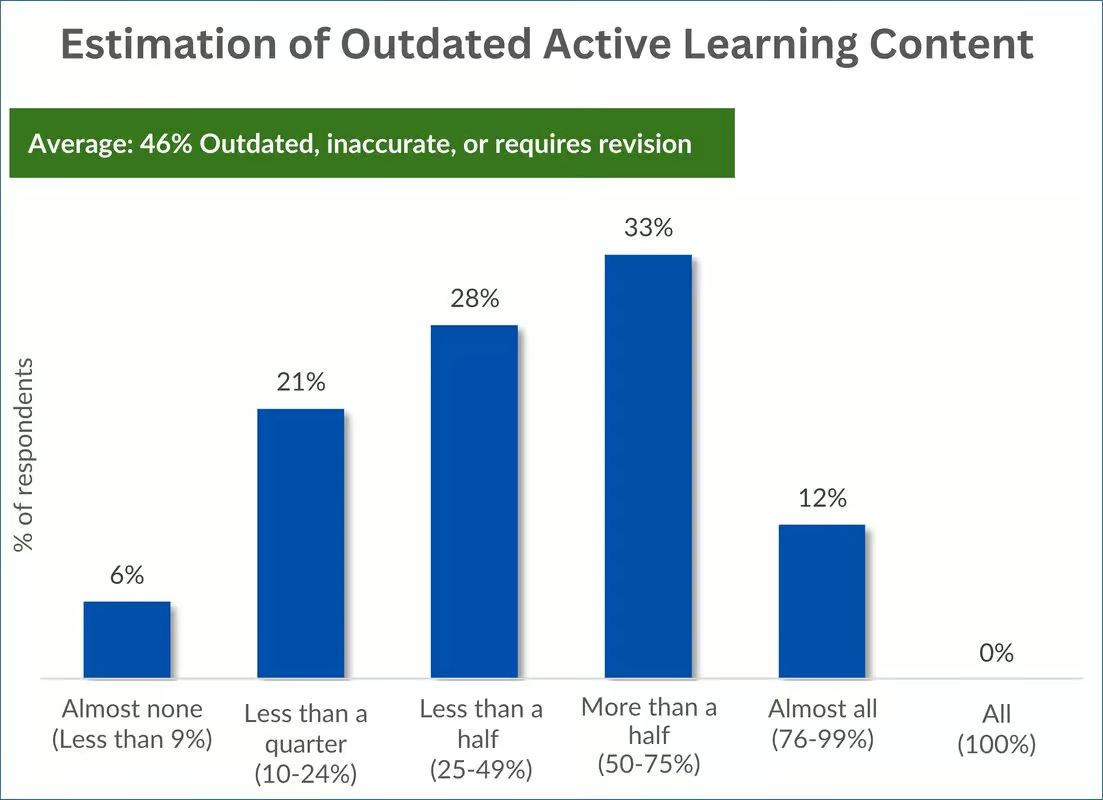
Margie made the connection plainly. An agent pulls from the knowledge base it is handed, and if that base holds conflicting or stale courses, the agent has no way to know. It will reuse the wrong answer as readily as the right one.
Governing the source is the only thing that stops AI from scaling yesterday's mistakes. It is also why single-source content design matters more now than it did before AI. One correct, governed version of an asset, reused everywhere, beats a dozen copies aging at different rates.
Past half outdated, even creation slows down
The cost does not rise in a straight line. It bends.
The research cross-referenced how hard teams find their work against how much of their content is already out of date. Among the least outdated organizations, 30% say rework and duplication heavily reduce the value learning delivers. Past the halfway mark, that jumps to 72%.
Creation bends the same way, and creation is what AI was supposed to rescue. In the least outdated organizations, 4% call producing new content a major challenge. Past the halfway mark, 23% do. When a library is largely out of date, building anything new first means working out what already exists and what still applies.
45% of organizations are already past that line. The window to get ahead of a content library closes as it ages, and AI is speeding up the clock.
This is not only an audit problem
In regulated sectors the stakes are literal. In April 2026 the FDA cited a manufacturer for publishing AI-generated procedures no qualified person had reviewed. The case involved manufacturing records rather than training, and broke existing regulation. No new AI rules were needed.
Accountability does not stop at regulated industries. When Air Canada's chatbot gave a customer wrong information, the ruling in Moffatt v. Air Canada held the company responsible for what its AI said. "The AI got it wrong" is not a defence, in a courtroom or in front of a learner.
Compliance only sets the minimum. The bigger exposure for most teams is quieter: wrong guidance reaching the frontline, decisions made on stale information, and trust in learning eroding until people stop opening it. That is a retail and technology problem as much as a financial services one.
It is also where the business case lives. Governed content means people learn from accurate material and ramp faster, with fewer avoidable mistakes along the way. That is how better content turns into employee value, and it is the version of this story a CFO will fund. The downside they grasp instinctively: content nobody can vouch for is risk sitting on the balance sheet.
The work that stays with people
This is not an argument for slowing AI down. It is an argument for being clear about which parts of the job it can take.
AI can draft, format, and translate at a speed that frees real time. What it cannot do is decide whether a policy was interpreted correctly, or whether a course reflects how the work is done. Margie frames the shift as moving from operator to architect: less hands-on production, more judgment about what gets built and what gets approved.
Some decisions never leave human hands. The needs analysis that defines the problem. The legal and risk review before content reaches a learner. The accountability for what ships. Adam puts ownership the way a developer does: if you used AI to produce it, it is still yours, and the responsibility to check it is yours too. This matters now because the clock is running. A Deloitte survey found only 21% of companies have a mature governance model for the AI agents they plan to deploy within two years.
Seen this way, governance is what lets a team use AI at speed while keeping control of what reaches people. dominKnow's approach keeps people at that gate: content grounded in material you have approved, with a person reviewing before anything publishes. The details are in the AI Security and Privacy Statement for when IT or risk asks.
A few questions to put to your team
Point your team at your twenty highest-stakes assets, the compliance courses and anything tied to a regulation, and have them answer four questions for each:
- Who owns it?
- When was it last reviewed?
- Which version should learners see?
- What breaks when the policy changes?
If your team cannot answer those for your most important content, you have a governance problem, and more AI output will deepen it. Two questions sharpen it for the boardroom. If an auditor asked which active courses reflect current approved policy, could you produce the list? When a policy changes, how many courses have to be checked, and how long does that take?
From faster content to content you can stand behind
AI has made production cheap, so the advantage now belongs to the teams that can trust what they produce.
Think of the two systems the way Margie does. The LCMS is the factory where content is built and governed. The LMS is the delivery truck. A learning content management system like dominKnow | ONE is built for the part that starts after the first draft: single-source content so one update reaches everywhere, versioning and approvals so every sign-off leaves a record, and the same review gate whether a person or an AI wrote the draft.
To see the difference, make a vendor show you three things, dominKnow included:
- Change one paragraph, see it live.
- Block one author from one course.
- Show everywhere an asset is used.
If a platform cannot do those, the governance is not really built in. Book a demo and bring your own messy example.
As AI keeps making content easier to produce, managing it well is what will separate the learning teams that scale from the ones that drown. The work that is left is the work that was always the point.