


.svg)

.svg)


The Hidden Cost of eLearning Content Management Across Multiple Tools



Introduction
Many learning and development teams build their technology stack over time.
An LMS is used to manage learners and track progress.
An authoring tool is introduced to create courses. Additional tools may be added for review, collaboration, or asset storage.
At first, this approach works.
But as content libraries grow, teams often begin to experience challenges tied to how eLearning content management is handled across multiple systems.
Updates take longer.
Content is recreated instead of reused.
Different versions of training exist across teams or regions.
These challenges are not always visible as direct costs, but they impact efficiency and scalability.
Content Duplication and Rework in eLearning
As content libraries expand, duplication becomes more common.Teams often recreate similar content across courses, programs, or regions. This happens because many tools are designed around complete courses rather than reusable content elements.
Over time, this leads to:
- Multiple versions of similar content
- Increased effort to maintain consistency
- Time spent rebuilding content that already exists
A more structured approach to content reuse in eLearning helps reduce duplication and improve consistency.
Why eLearning Content Updates Become Time-Consuming
Learning content is constantly evolving.
In multi-tool environments, updates often require teams to locate, edit, and republish content across multiple systems.
This creates delays and increases the effort required to maintain accuracy.
Centralizing how content is managed and utilizing dynamic delivery for instant updates allows updates to be handled more efficiently and consistently.
Where Multiple Tools Start to Break Down
- Disconnected workflows slow production
- Updates require manual effort across systems
- Teams lack visibility into current content
- Scaling requires duplicating content
Tool Stack Complexity in eLearning Content Management
Organizations often rely on a combination of tools to support different parts of the content lifecycle.
This can include an LMS for delivery and tracking, authoring tools for content creation, review and feedback systems, and asset storage solutions.
While each tool provides value, managing them together can create overlap and inefficiency.
Simplifying how these systems work together can reduce administrative overhead and improve workflow efficiency.
Collaboration Challenges in Course Authoring and Review
Content development involves multiple contributors.
When workflows are spread across tools, collaboration becomes less efficient.
Feedback may be handled outside the content environment, and teams often work from different versions of files.
Bringing collaboration into a shared environment helps streamline the review and approval process.
Version Control and Content Governance
Maintaining accurate and up-to-date content is critical.
When content exists across multiple systems, it becomes difficult to ensure teams are using the most current version.
A structured approach to eLearning content management improves visibility and control over content updates and governance.
Scaling eLearning Content Across Teams and Regions
As organizations grow, content must support different audiences, locations, and languages.
In multi-tool environments, this often leads to duplication and increased complexity.
Structured content strategies allow teams to scale without significantly increasing workload.
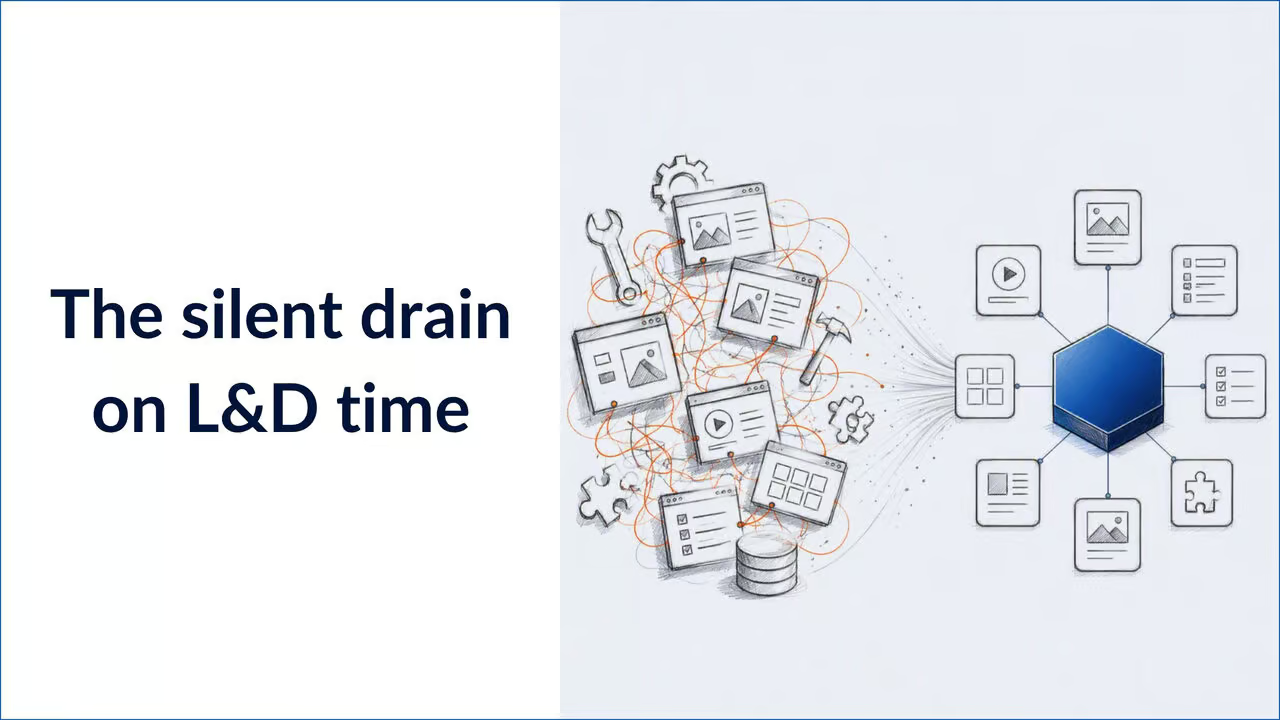
Multiple Tools vs Structured LCMS Approach
A More Structured Approach to Content Management
Across all of these challenges, the issue is not the tools themselves, but how content is managed.
A structured approach focuses on organizing content into reusable components, managing updates from a central source, supporting collaboration within the content environment, and delivering content across multiple formats and audiences.
This approach supports scalable eLearning content management strategies.
How dominKnow | ONE Supports Content Management at Scale
dominKnow | ONE supports the full lifecycle of learning content within a single environment.
Teams can create content while organizing it for reuse, manage updates centrally to reduce repeated effort, collaborate directly within the platform using built-in review workflows, maintain visibility into content versions, and publish content across multiple formats and delivery systems.
For example, shared content such as policies or product information can be managed in one place and reused across multiple learning experiences. When updates are required, those changes can be applied more efficiently without manually updating each course.
The Impact of a Structured Content Approach
- Faster Updates Reduce time spent updating content across multiple systems
- Improved Consistency Ensure learners receive accurate, up-to-date information
- Scalable Content Delivery Support multiple audiences without duplicating work
The Bottom Line
Managing eLearning content across multiple tools can work in the early stages.
As content grows, the effort required to maintain, update, and scale that content increases.Organizations that adopt a more structured approach to eLearning content management can improve efficiency, maintain consistency, and better support long-term growth.
Managing content as a system, rather than as individual courses, helps learning teams scale more effectively while maintaining control and consistency.