Episode Transcript
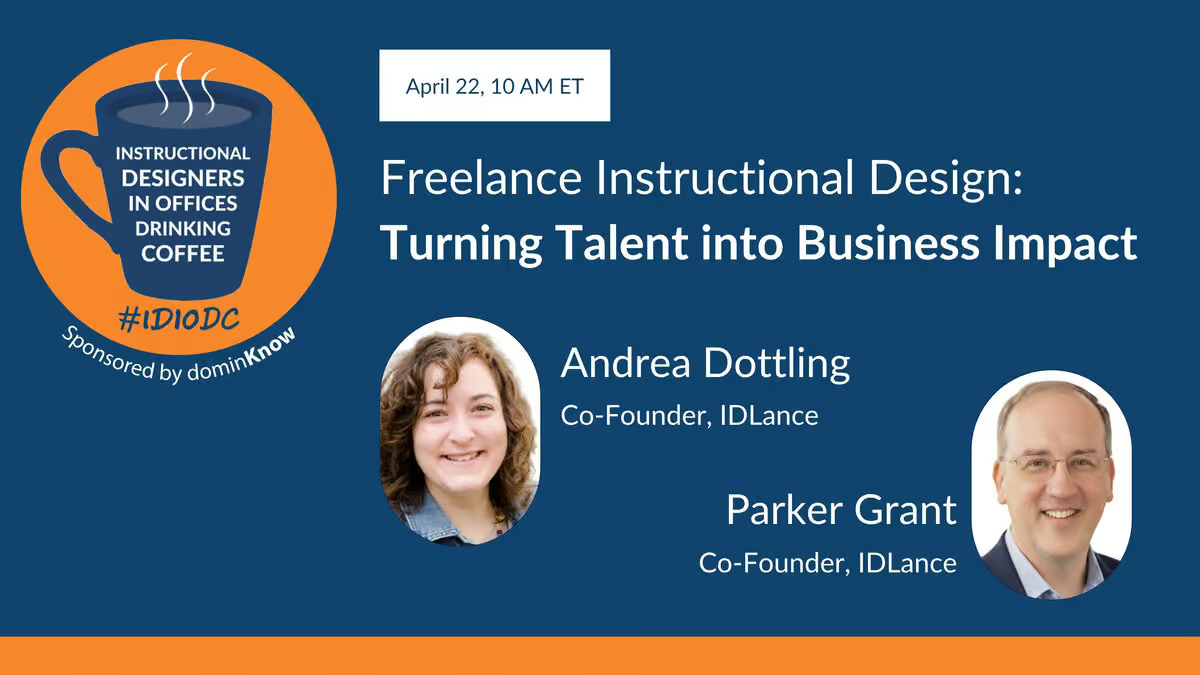
Chris Van Wingerden: hey. Welcome to a Wednesday. Hope everybody's having a good day far. Welcome to Instructional Designers in Offices Drinking Coffee, drinking tea, drinking cold beverages, hot beverages, beverages of choice. As always, this episode of Instructional Designers in Offices Drinking Coffee is brought to you by dominKnow | ONE, helping L&D teams to develop, scale and deliver learning that maximizes employee value. Hey, it's been a while since we've had a double guest episode. Usually we're on solo missions, but, we're working in a team strategy here today. We have Andrea Dottling and Parker Grant joining us here. And they are co, co-heads. Coco co-head, coco, head co honchos, coco head honchos. Co-head honchos of an organization called IDLance. Andrea and Parker, we'll start with Andrea. Tell us a little bit about yourself personally and your time in our space here in the L&D world, et cetera.
Andrea Dottling: Yeah, sure. So as you said, Andrea Dottling, I am based in Apopka, Florida, which is outside of Orlando. I've been unofficially doing this kind of thing, instructional design without really even knowing what it was, probably since the beginning of my career. And then I found out what it actually was and I'd say 2016. And ever since then, my career has been focused in that started out in higher ed. Slowly started freelancing in corporate thanks to Parker. Actually, he gave me my first freelance instructional design gig ever. And, ever since then, he's never been able to get rid of me. So that's kind of where we're at, where, my background. And then I'll tell more about IDLance later, but then starting in, I'd say late 2019, early 2020 is when we started IDLance.
Chris Van Wingerden: Right on. And Parker, introduce yourself to our folks here.
Parker Grant: Yeah, yeah. no, I know Andrea, I would never wanna get rid of you, let's just, make as straight. But yeah. I'm Parker Grant. I'm in the Hartford, Connecticut area and many times I wish I was down in Florida. Mm-hmm. But yeah, I've been in the L&D industry for 34 years. Prior to that I was a mechanical engineer for five years, all 39 years in the industry. And I switched to freelancing around 2008 and I just have been loving it ever since. And Andrea will talk about IDLance, we started that in 2020. And I have gone through my share of education as well. getting a master's in ed tech and a PhD in adult learning and bridging all of that stuff that I've learned into practice has been a joy of mine. And here we are still going.
Paul Schneider: You've probably seen a lot of things come and go. I just saw a post from a friend talking about, you probably remember laser discs.
Parker Grant: Yes. Yeah.
Paul Schneider: For those of you who haven't heard of that, look it up sometime.
Andrea Dottling: What?
Parker Grant: That. Overhead projectors. Hmm.
Chris Van Wingerden: Yes. Film strip projectors. Yep.
Parker Grant: Yes.
Chris Van Wingerden: No kidding. Alright, that's the two of you. But you are both co-head honchos of IDLance. Tell us just quickly a little bit about that.
Andrea Dottling: Yep. So in 2020 we launched as. Really just a curriculum and community for people who were already working in instructional design but wanted to go freelance. And it was really almost, I think it was a monthly subscription in LearnDash. It was very, a little bit embarrassing. It's okay.
Paul Schneider: Yeah.
Andrea Dottling: But through doing that we actually were approached by some companies asking okay, you have this community, do you do learning projects? And that's what Parker had already been doing. And I was working with him doing that stuff too. So we said, sure. And ever since then we have had this sort of symbiotic relationship where we are growing and mentoring an instructional design community of freelancers. And that could be anything related to instructional design, could be video, could be writers, developers, anything. And we host community events and it's kind of slow recruiting, 'cause we're getting to know people and how they interact with each other in those things. And through the community we provide for them. We're all on Slack every day, all day griping, but also collaborating and just kind of helping them not feel alone. But then at the same time, we use that community, not use, we collaborate with our community to put project teams together for our client work. So we're giving the community gigs, but then we're also doing really cool stuff for clients. And that could be, we've done everything from. Financial literacy for a nonprofit to working for a very large global communications company and converting courses and making new things, everything as small as a little in-person or, online course or, and as big as entire programs. So we kind of scale up and down utilizing that community. Making sure both sides are supported. We get to know people pretty deeply, and that's kind of the best part. Some of the people that we first hired for, their first freelance gigs ever back in 20 20, 20 21, now have their own full fledged businesses and they're hiring other people from our community. It's just kind of really cool to see that happen.
Chris Van Wingerden: Cool. That's
Andrea Dottling: that's who we are.
Chris Van Wingerden: Yeah. So freelancing, obviously a bit different than working directly within an L&D team within an organization. Let's talk I guess a little bit that more broadly in, in this space, is it something that we're seeing more and more of? Is it something that's kind of plateaued, fill us in on a, on a couple of data points on that?
Andrea Dottling: You wanna take that one?
Parker Grant: Yeah. freelancing is according to a lot of the market data that we have been seeing and reading, is growing, we are finding more and more people who are not necessarily working freelance as full-time. But they are taking the chance to do it on the side even when they're working full-time. So we are seeing more of that kind of thing. And especially these days when we're in an uncertain global economy, people are trying to think ahead, okay, what happens if I get laid off? If I'm next, what do I do? So there's a lot of people out there exploring that field and personally, we have seen growth. through the, the community and we have seen many comments in our community about why they chose to do what they did. And it is validating what the market data is saying.
Paul Schneider: Hmm.
Andrea Dottling: I think even just culturally, I think people are trying, and we support this, and this is kind of why I started freelancing too, especially as a mom is wanting to own your own time more, Right. do good work, help people, but also have more control over your schedule. And that, you know. Can come with some things where of course, you gotta treat yourself a business and finding clients and all that. But at the end of the day, for me, it's worked because I feel I can do all the things that I need and want to do as a human. And I think after people are working from home, from COVID and all of that, that people don't wanna lose that sense of autonomy, I guess. And then also the security thing. okay, even if you have a salary job, I always side gigged and had multiple jobs all at once, I wanted to working with Parker, bring that to other people and be you probably can make it happen if you want to. And have that sense of security. And also using your brain in ways that maybe you don't get to in your day job, even if you your day job,
Paul Schneider: Yeah, I think about the people coming to it, at least there's two groups and I was wondering if there's other groups. There's the folks that are already have that full-time job and are looking for that side hustle for a couple different reasons. you said, one, they feel that they're stuck a little bit, don't get to do maybe some of the fun things that they wanted to do or, job security or just, need more income for that. On the flip side, it seems there's, folks are thinking. I'd to get into this instructional design thing if they know what that's called, or they've done a little bit of it, but of course they're having, trouble finding a job, Hey, you don't have any experience, this requires experience, and that kind of thing. Are there other types of groups coming in and then with those two groups? I would think that there's some very different needs, in all the cases, you said, you're in a sense running your own business, and a lot of folks don't go to do that because they're looking to run their own business.
Andrea Dottling: Yeah, I think, we've seen a lot of really successful former teachers that we've either given them their first gigs or they have the skills, but they just need a chance to be able to apply that in a different context. Um, there's that. And then we do have a lot of people who are amazing instructional designers who either slowly built up their side gigging business, and it became big that it actually became their main career and they were able to leave that salary job. And they have their own, businesses. And then there are people who are, can be just as successful where they're working for an agency us or another agency and they're able to have a bunch of different projects, through different sources, but they own their own business. Right. But they're all, but they're, we're able to be that. Per that kind of security for them where. They don't have to be going directly to companies saying, Hey, hire me the individual and give me work. we can put together teams of individuals for larger companies. And I, I see a lot of that. I think I didn't answer your full question, but maybe Parker, I don't know if there's anything
Parker Grant: No, you said it. Well, I mean, teachers are a large part of our community. I think I did, a quick analysis of all the names that we had. One time it was close to 40%. Of our community, are former teachers, and that included, higher ed as well. it was a mix of K 12 and higher ed. And as Andrea pointed out, we actually had, members of another agency doing what we do. Join our community and we've actually partnered together on some projects where we would tap into their expertise. this particular agency I'm thinking of, has a lot of talent in the visual design area when it comes to PowerPoint presentations or you know, any kind of media. There's just a lot of great visual talent there. And of course they do ID work and all of that, but that's something that we, um did for one particular client is where they really kind of emphasize the visual side of things. it's just, depends on the client, the nature of the work and the kind of people that you associate with.
Chris Van Wingerden: Susan in the chat is noting I've recently retired from my full-time gig, but still want to work. that's her, yeah. That was her inflection point, I guess, into working in freelance.
Andrea Dottling: we have, yeah, she would be, be able to find friends in our, for sure. Yeah.
Chris Van Wingerden: Right on. What kind of, I guess strengths and skills you would need for the freelance world, that are, maybe heightened or more particularly important because of the nature of the biz that you guys are in?
Andrea Dottling: I think that's a really good question and I think that, the first couple of things that come to my mind are self-awareness. And the ability to see how you're coming across to other people and how to sort of meet a client where they are and not overwhelm them with I'm an expert. You need to do it this way. But be able to put that business hat on and really listen to a potential client. And I think a lot of people are really proud to say no, you're doing it wrong and I know better. Or say, no, you, that's not what you actually need. But we're really big on this part of the business acumen where you need to build trust with people first before you can tell them what to do. I'd say that that's probably the number one thing that I think about when I'm trying to talk about how can you kind of take your business to the next level? really self-awareness of how you are, and also for me personally, being. Knowing when to be bold and when to just go for something. Even if you think you might not be a million percent fit, but you know you could do it and not saying. Again to the no thing. Not saying no to something until you know the full details. Because a lot of times people will be oh, well I already have this other project. How could I go for this other one? How am I gonna have enough time? It's how is that all gonna work? And I think people who are really successful with this, are very creative with their time management. they go see how, what something's really gonna be before they make that assessment. And then we're, the reason we also exist too is that say someone takes on too much stuff, you can tap on people. That, to sort of work on stuff together. But I think, um, people are much more capable to do things than they realize. I feel a lot of people box themselves out of their opportunities because they're worried about certain logistical things, when if they just went for it, who knows? Maybe the project wouldn't actually start for three months from now or. Maybe the job description of the gig is actually not totally what it is, and you just really never know. the ability to be bold and go for it, and then also to be self-aware in how you're building relationships with other people.
Chris Van Wingerden: Hmm. Very cool.
Paul Schneider: In some cases, the role you're in pushes you because you have to sell work with the different departments, and it isn't as formally structured on there. And you do have to build that confidence even though you're already hired and an employee of the organization in other cases. You don't, they just kinda throw it over the wall if you speak or whatever else, they assume there and there and you, you don't gain that experience, and likewise, depending on your organization, you may be actually tracking how long it takes to do things. And reviewing that and looking to improve. In other cases, you're just doing the work. And in the freelance world you need to have a varying what the effort really is involved.
Parker Grant: Mm-hmm.
Paul Schneider: I think when I first did some of my types of projects in that area, you make your best guess towards it there that we'll sell it, within the budget there if you overestimate, you just do a great job and you learn from it and then move forward there. And your hourly rate or whatever else you, you've kind of calculated. 'cause they usually don't wanna pay you by the hour. It maybe is a bit less, but again, you said, be bold, with some of those things. And, uh, everything is a learning opportunity.
Andrea Dottling: Yeah. And the power of repeat clients, that's how mm-hmm. The kind of the basics of being able to maintain a business this is just being able to develop that relationship where they want to work with you again, either because you're a delight to work with your work good, you wanna reduce any of those barriers of Bristols that you can not to be, and that doesn't mean being a pushover. We, you know, we talk about building trust, but then later, after you've built that trust being more consultative and providing even more value in that way.
Paul Schneider: Well, I was thinking you get a lot more potentially, this is the, the exciting and challenging, part of you get a lot more variety. I think when you're in an organization or you're in higher ed, you're kind of in a, a structure. You, you maybe been using one tool or, or a couple tools there or whatever that tool set is doing it one way. And then when you get out into this. Part of it is you need to push yourself to explore and look at other things because, almost always the way you've been doing it, there is a better way for what you need to do. I mean, you could reuse things, you could, uh, single source design. There's all sorts of things that, you maybe never had an opportunity before or didn't have the approach to before that. I think it sounds maybe tell a little bit about what that community can bring to these folks, or, what do the teachers get out of it that, that maybe some other groups don't or something too.
Andrea Dottling: Do you, that was a question,
Paul Schneider: Yeah. I was curious. As I imagine we got people coming from all different things and
Andrea Dottling: Yeah.
Paul Schneider: How do you kind of meet the needs of those and what are some of the Yeah. Needs that, people are wow, people from this group, they really benefit from X because that seems to be the gap that they have and they're able to meet it.
Andrea Dottling: Yeah. I would say for both. the advantage for the people, and I'll be really clear to be, a freelancer with us or in our community, it's free for them. It's not this isn't a paid membership for you can only be in our slack if you're paying us money. it make it, it behooves our client work to have as many cool people as possible, that we're in communication with all the time. But I think what I usually hear people who are on the freelancer side say is that they feel sort of seen and supported. Even just being with other people who are trying to do the same things. And then also, you could ask literally anything in our slack or in an event, and we have not knock on wood. Because I will kick them out if it starts happening. We have not had any sort of mean people or bullies or anybody say, or anybody and, and if that happens, it's happened maybe once or twice. they're, they're gone. we just don't tolerate it. it's a really, really safe space to ask about everything from health insurance, what are you doing with your retirement? I have this crazy client situation. What should you do? How did you find clients? And then lar, Other freelancers hiring other freelancers when they take on a bunch of work. it's you could, there's there, when I was starting to freelance, that's what my problem was, is I felt I had to kiss a lot of butts to get any information or to make connections with people and then if you say the wrong thing or do the wrong thing and these people on LinkedIn or almost celebrities in the industry of whatever, you're scared of doing the wrong thing and then being on the blacklist or whatever, we. Wanted to cut through all of that. on the freelancer side, that's what's up. And then for the clients we've tried to our whole thing is that we're not just setting and forgetting stuff and the people that we're putting on projects, we. Know them.
Chris Van Wingerden: mm-hmm.
Andrea Dottling: Usually we know what they're like, we know what their skills are and if we're branching out and getting, people outside of the community or whatever, we're not willy-nilly adding people to stuff based on their resume and then the entire time that people are working with us, and then even for the clients, it's an open door, you can message us. You there's, we usually have, if it's a larger project, we'll have a project manager, qa, and then we're aware of what's happening at any given time, which for the clients, that means we can get a new person, we can scale for them, and then it's expected on their end that whoever new comes on is gonna know what to do because we are going to tell them, the client's not doing all this reeducation and reorientation that. We take that on. And we try and stay as super down to earth for them as possible. there's no bureaucracy or bloat. we're not gonna make them pay for a whole project team if really they just need one or two people. it's, it's really dependent on what they need. And sometimes clients float between, Hey, we have this larger project, but then we also have this little one, and then we also have this other thing. And then we talk about, okay, is a retainer better for you? What's more, what makes more sense? Because then they can have a graphic designer one week and I need the next, we say as literally flexible as possible. I had, I posted this corny thing on LinkedIn the other day that was oh, if somebody comes to us and says we need 37 courses in a month. Oh wait, no, we actually can do that if they need that. a lot of people would be that's not the right answer, but sometimes it is.
Paul Schneider: Mm-hmm.
Andrea Dottling: we just try and stay as kind of agile as possible and just try and make everybody feel comfortable working because the more stiff everybody is, the less efficient everything is, I think.
Parker Grant: Mm-hmm. Yeah. I think it's important that we have, more that relaxed social atmosphere with our freelancers. Especially when we have these projects that could be very, let's just put it this way, globally, visible projects with high level attention kind of projects. Mm-hmm. And it, in normal cases that might be feeling, it, it could give a lot of pressure to people. But when we set up the teams within private channels in our Slack community. Andrea and I are always in every one of these, and we have the PMs or the program manager, overseeing the projects. But once in a while, things might feel a little bit tense, but we throw in a joke once in a while. I mean, we just kind of try to bring in the humor, helping people feel relaxed and feel supported. There are times when you may have, an issue that may come up from a freelancer and the client and, Andrea's really good about assessing the situation and how do we respond to the client in that case, and how do we work with a freelancer to continue the work. we really to make the whole situation as comfortable as possible. And also when we work with clients, we kind of try to get into their, their flow of work rather than try to ramp up, take months for onboarding, whatever. We just wanna jump in, help them, and then just leave when they're done with us.
Paul Schneider: You know, what struck me was pretty interesting there is, if you're a freelancer one, I think everyone who's done it a little bit or one there is the feeling is I'm on my own. You know, and great, there's a lot of great resource on the web. Things have, made it even easier there, but from the beginning of. You think it's a stupid question, but all the questions, insurance, retirement, and all those other things that, uh don't think about 'cause they're kind of taken care of. Usually when you have a, if you're lucky enough and when you have a job, but think of those. But then also I love that when you're on the job, there's always going to be a situation where you don't feel as comfortable as maybe you need to be. But then having a, a resource where you can riff off that or potentially part of your team or you need that other resource and that can help make that easier when you're in studying stuck of, geez, who do I even reach out to? And stuck at that spot.
Andrea Dottling: Yeah.
Paul Schneider: I think that makes a very interesting change on their, yeah, that, that sounds pretty awesome.
Chris Van Wingerden: Cool. Flipping over the other half of the equation, what are some of the things that, an organization, may be looking to dip their toes into using freelancers for the first time? What are some of the things that they should probably keep in mind, for their half of the equation?
Parker Grant: Yeah, I, I, this is really a good question and, there is, at a high level, I think organizations should think of flexible talent as a strategy. And this is where a lot of times when you rely on your own people within an organization and something happens, then what are you gonna do when you don't have those people anymore? Or all of a sudden, sudden you have a capacity issue, you get a surge of stuff that you have to do. Where are you gonna find the people? if you have a strategy where, say, an L&D department and a corporation. Would bring in a flexible talent team. You can scale up or down as needed, but you already have the vendor that's really important. You already have the vendor in the doors of the company. They're registered, they're listed, the part of PL, all of that stuff, and you can just call on them anytime that you need to. And if you have to scale up or down, that's one thing that a lot of companies are missing. Is that key strategy just for scaling up or down?
Chris Van Wingerden: And what about the relationship then? Is it, does it end up being different than having an internal employee? if you're an L&D manager and this is the first time, what are kind of the relationship differences? Or, or are there any?
Andrea Dottling: if it, it depends on how frequent the work is Right. But usually it, it's one of, one of us. How owns the main relationship with the client. it's just Hey, tapping in you, I need this and this by this date. who do you have? Or sometimes we're in a retainer situation where we're giving them a weekly update through our project or program manager of Hey, this is how much you have left in your retainer. Is there anything you need? Or if there's something ongoing, we're giving them they're, they're getting an update of what they have left and what's going on and the different updates on all the different projects. it kind of, really depends, but what it often feels on our end when we have that kind of relationship is Hey, what? Hey, what's up guys? we best friend, I haven't talked to you in a few months, but we kind of need something from you. And then they're we have this going on. Can you help? And then we just get the details from them and, put a project team together. The, when we have had, And this has happened a bit too, repeat work with a client. A lot of times, we'll keep the same team or the same people and they kind of become experts either with that platform or with that client or, or and whatnot. And then if one of those people goes and oh, I don't have capacity for this new thing that came on, but I'm usually working on this kind of thing, then. Our community is awesome. I keep saying community much that it sounds a cult, but it's not. I promise it's not. Um,
Chris Van Wingerden: well, they both with c
Andrea Dottling: yeah, there's usually a handoff or a communication or we have documentation that another person joining on would be able to catch up. But for the, from the client's perspective, their relationship is very consistent either with a project manager or one of us. And if they want to, if they are working directly with some of the designers, and that happens too, of course. Then, we're all still aware of all the communication that's happening. It really honestly depends on what makes the client feel comfortable. 'cause some people just wanna hand something off, get a weekly update, when do we have to review it. And then some clients wanna be involved with every single meeting and every single thing. it kind of just, well, it's their comfort level.
Paul Schneider: We have a comment, in there. Christine had said, Hey, what about those of us who wear multiple hats? I'm a freelancer with a client that wanted a partner who could design and develop. Are, are we welcome to join?
Andrea Dottling: Yeah,
Paul Schneider: I figured the short answer was, yeah, it seems you're a very welcoming community and they're. Aren't, any parameters. 'cause you've talked about you got people that the classic, teachers wanting to shift gears and, and experts at, or retired folks that, wanted to keep working or start to expand their business.
Andrea Dottling: Yeah, and we have people in there who are in partnership LLCs, where there's two people working together, and it's also just anybody even remotely related to the field because you know this kind of work, it could mean anything. It could mean writing, it could mean making videos, it could mean making a workbook. you just have no idea. yeah.
Parker Grant: one, one of the common, things that I think a lot of freelancers don't realize is that they can tap into our community for us. Extra support, partners, if an ID needed a graphic designer, they could just call into the community and say, Hey, anybody out there really good at making graphics? Sometimes they think they have to take it on their own to do this, whereas they're in a community of over 2000 people and they can just call on anybody and I think Paul, you probably would agree with me, is that there is more opportunity for learning than there are people to help solve the problem. I mean, the world is huge. We've got a lot of problem, and we have lots of opportunity to learn, and I don't see competition. If there's anything when it comes to other LLCs or businesses or whoever coming into the community. How about it? Just, do what you gotta do. it's all about serving, our clients and saying yes as many times as we can.
Paul Schneider: I think that's a great thing. 'cause myself personally and a lot of other folks I talk to, they may feel that they are pretty confident that I can do x. But they know either 'cause they worked with or it's come up that they need maybe a graphic designer or whatever else that they're not as comfortable with of wearing. I can wear two hats, but if I put it on the third one, it looks uh, I don't know, it doesn't belong. And bringing someone else in. I was kind of wondering, have you seen any changes, in the last few years or you anticipate that people or organizations are saying, you know what, instead of hiring two more folks let's just keep one person or no one on staff and let's outsource. Or hey, we've outsourced some before, but let's keep it up to staff. Um, you talked about flexibility, but have you seen any changes in there, uh, that have been happening the last few years and make sure a little bit about that
Parker Grant: happening this year, one of our current clients, we're, we are essentially the L&D department for this client and. Used to have several people. Um, they went through some changes. But yeah, we are, the vendor is sort of the defacto L&D department until they get a chance to fulfill their vision, bring in the people as needed full-time. And we'll just scale with them, they won't need us forever. It's just for the time being. Yeah. that is happening now.
Paul Schneider: I'm curious as to what's their plan? 'cause it sounds they got rid a lot of folks and now they need someone, or,
Parker Grant: uh, well, I, I think, they may try to keep us as a vendor, only need us when they need us. that could happen next year. But now there's a lot of work to get their programs in place and getting the executive buy-in.
Andrea Dottling: Yeah. And part of what we're doing with them too is the strategy for that is help is part of our team is helping with the strategy of figuring out, okay, what does this new team look like? What makes the most sense? Do we need these core people? And then we outsource these types of projects. we're actually working with them from the very, very beginning of rebuilding this whole strategy and structure and that's really, it's exciting to be able to work alongside people being thoughtful about it.
Parker Grant: Hmm. And this is really another thing I love about the communities, that we have people that range in talent from those that are doing the ID work to the visual design, to the multimedia, but also the learning strategists who think in systems of architects. And we're integrating that range of talent. And it's just a matter of finding the people who are available and that we can meet the budget, whatever the constraints we have for budget and just. Go and build a team and make it happen.
Chris Van Wingerden: Is it, an advantage or, or a disadvantage for someone freelancing to be sort of specialized in a particular field or topic area? And I'm not talking technical skills. Oh, I do video. Oh, I do e-learning, but, oh, my background's financial, and, and that's where I'm coming from. Or my background is, I dunno, legal or, or something that. Yeah.
Parker Grant: Yeah.
Chris Van Wingerden: Is, is that helpful or is that a barrier or,
Parker Grant: oh, no, it, it can be very helpfuL&Depending on, how you approach this. There is a person I, I spoke with recently who just. Decided to, to reach out, just chat with me to learn more about freelance and forth. And she wanted to know, how to get started with the business because she's an ID and she wants to go on her own. And one thing that's very difficult is to be an ID and blend in with a million other IDs. You've seen lots of stories about how do you make your portfolio stand out, right? Well, how do you make your website convey the right message the people will say, Hey, I want that id. There is a, there's two camps, okay? there is the. It's also the tea. You know, you could be the broad, ID cover everything, do all industry, or you could be on the vertical side of the tea where you specialize in an area. you may want to start broad, kind of get the flavor of what it's to work in multiple industries. But eventually you may want to niche because when you, become known for a specialty. You actually would get more business. when I was talking to this woman about her role, I asked her, what kind of experiences have you had in your career? And she was talking about hospitality. She worked in hotels. I said, oh man, have you ever thought about being an ID for the hospitality industry? Think about that. I mean, all of them have onboarding, they have regulations and rules and state laws, all of this stuff. And that in itself can be unique. what if you were to build your business around, hospitality And I said, you know, check it out. Look online. How many companies or businesses are doing that? And anyway, we got the conversation going. And yeah, you can do well if you can just, make sure that you. The niche that you are looking at, there's a market for,
Andrea Dottling: And I think even in starting out, you can have that niche, but it doesn't mean you have to say no to something that isn't specifically in that niche. I think a lot of people, I was talking earlier about boxing themselves out, oh, well I'm only supposed to be doing this, but when you're starting out, you just see who you, you gotta make as many connections as possible. And sometimes that means not always being able to do exactly what you're trying to do, but that's, I'd say that's just in any business. Right. You know? Hmm.
Paul Schneider: When you talk about the niche, one of the the great things that, that people, when they're hiring anybody, they wanna feel, they're hiring somebody that gets it. And if you already get that, you can streamline working with a SMEs because you already understand some of the things, speak a little bit of their language. That just helps that relationship,
Parker Grant: key speaking their language. Yeah, yeah,
Paul Schneider: yeah, I think one of the things when you're doing a freelance, you need to certain, to say yes a lot more. And I think, one of the things, maybe you could assert this or, or give an example of how this came into play for an individual. 'cause it's wanting to say it, but, uh, if you have a community yourself that seems to not say, oh, that was a stupid question, or is there to help, um, and can help, uh, you know. Hey, you can subcontractor, things that. Having that kind of backup gives you the confidence that Yes. But I'm wondering, have you had cases, can you kinda share a story or two that of where somebody did stretch themselves or they found themselves a, a, a little bit outside their comfort zone, to speak, and, were able to rely on the community either to get answers or additional help or.
Andrea Dottling: Yeah, I think we see that a lot actually is in our chat. It'll be Hey, I'm working on this project. They want this. I know how to do this and I'm working on doing this other thing, but I don't quite know that. And then boom, reply, reply, reply, reply. people are just hopping, people are self organizing
Chris Van Wingerden: mm-hmm.
Andrea Dottling: To help each other. They, we had a book, we have had, we have book clubs that have just self-organized, within the community. And, and even in, I think, internationally, people were Hey, I can never make the, eastern central time events. You guys wanna do our own, people are, are finding each other for help. And then I know that, I have seen people who were kind of individual freelancers take a step and get a client that was for a much bigger project and find their own project team within us too. And that is really cool. Or what sometimes happens is that individual is Hey, I have this contact, I have this project. I don't wanna own this. I wanna work on it, but I don't wanna own it. And they'll have us have the relationship with the client and manage it, but they're the lead ID on it or they're the lead on it. And then we build a project team around them if they need it. But then they don't have to worry about all of the contract stuff and the payment stuff and and whatnot. that has happened too, and that's been really fun.
Parker Grant: Yeah, we help them say yes.
Andrea Dottling: Yeah. We help them say yes. And then they get, of course, we have a program where if somebody does that, they get, a special payment, a special fee for, for doing that kind of thing. And we're not just taking their stuff and keeping it. But it, it really reduces the risk and fear for somebody to go out and get a huge project if they know they have backing,
Paul Schneider: mm-hmm. Yes. But,
Andrea Dottling: we do call it saying yes. But, because some people will be yes. But if we need 50 of these by next month, I have to talk to some other people. Right,
Chris Van Wingerden: Yeah.
Paul Schneider: you gotta have boundaries, but finding a way to make it happen, or Yes, but this is a slightly different scope and here is exactly why here is how that is managed kind of thing.
Andrea Dottling: yep, totally.
Chris Van Wingerden: I know our time is running short. We've got a a bit less than five minutes left, but we wanna leave a bit of time at the end to sort of wrap things up. But you both have done lots, obviously lots of time in this industry and lots of projects and everything. do you have a neat or a favorite, project or memory or, a fun story of, that sort of thing in the past little while that you can talk about?
Andrea Dottling: Well, my favorite thing that we ever did was when we started that was to do the business of freelance that we run. And it's basically a six month program where we take people from figuring out what they do and literally the end product is building an entire business together. So it's Parker myself, and then an operations guru that is basically our ops director for IDLance. We run it together and we limit it to eight to 10 people max. Oh, we do have one starting May 9th. Sorry, just put that in. A shameless plug, um, where literally we are meeting weekly and building this together for people to be confident to. Either scale their current business 'cause they're lost on the actual operational aspects of it, or to finally quit their job because they wanna start freelancing that, watching these people do this has probably been my favorite thing that we've done all year or all since we started this.
Parker Grant: It is fun.
Paul Schneider: It feels like the old phrase, when, I mean if you ask somebody where do they wanna work, no one answers human resources.
Andrea Dottling: Hmm,
Paul Schneider: well, mostly no one says that when they're five years old or six years old or whatever, the running your own business has this alert and then when you get into it, you're the operations. There's all the pieces and all that. that. Yeah.
Andrea Dottling: taxes.
Paul Schneider: The taxes and all that to help put some of that together to so that the business isn't running them, that they're running it. I think a lot of people fall in that trap where you just feel you're working the 80 hours a week and barely getting along.
Andrea Dottling: Totally.
Paul Schneider: and that's probably not where you wanna be. you said you did that primarily for the flexibility. And some of those things that are important for your other life goals and other things that are going on. So,
Andrea Dottling: Yeah.
Chris Van Wingerden: Excellent. Well, Andrea and Parker, how do folks get in touch with you, reach out your communities, what's going on, what what's all that?
Andrea Dottling: Well, IDLance.com definitely is where all the links for everything are. You can join the community there. Like I said, it is fully free. If you don't want to join our Slack community, there is the form to still put all of your skills and expertise in. if we were going to build a project team, you are in that database.
Chris Van Wingerden: Excellent. Well, thanks Andrea. Thanks Parker for all your insight, your input. Thanks for the the wonderful folks in chat helping out. Brent, helping to field some of the questions for Paul and I there behind the scenes and, helping answer there. Appreciate everyone's time for joining. Hope you got some good insights on there. We're back again next Wednesday at the same bat time. Same bat channel, as they say.
Paul Schneider: Alright. Thank everyone. Appreciate everyone making some time out of your day and again, Andrea and Parker, wonderful insight. You got an awesome thing going and I think you're gonna really help build an extension of our industry in some positive ways by getting people together, whether they freelance together or just part of that community. So thanks.
Parker Grant: Excellent. Thank you very much, Paul and Chris.
Andrea Dottling: Bye everybody.



.svg)

.svg)